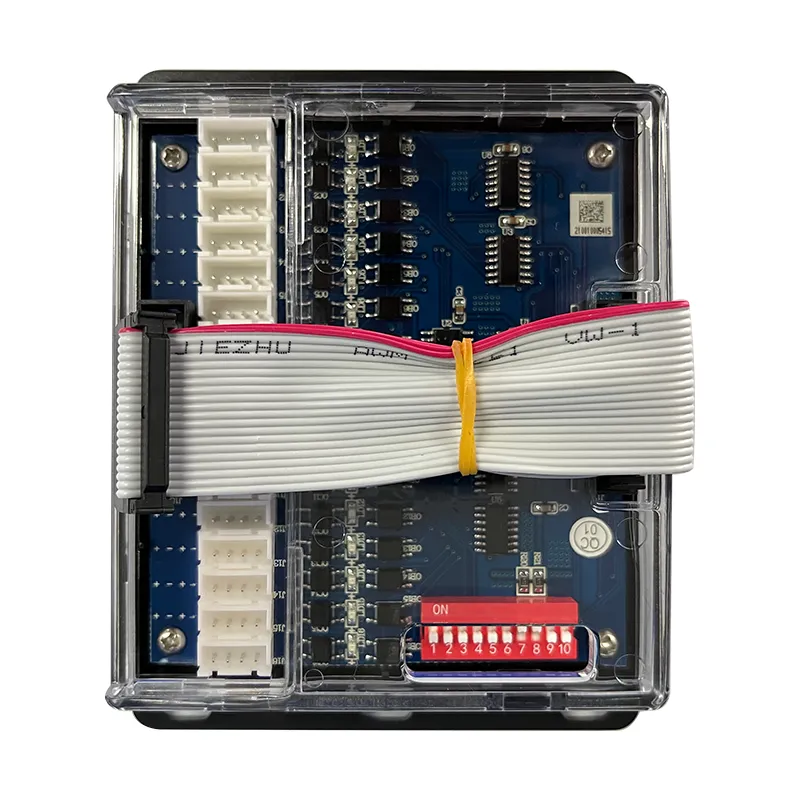
Elevator Intelligent Controller JT-3000C: Advanced, Safe, Efficient

Elevator Intelligent Controller JT-3000C: Advanced, Safe, Efficient

Release Time: Sep . 19, 2025

Industry Trends in Elevator Control Systems

The global elevator industry is undergoing a significant transformation, driven by advancements in smart technologies, energy efficiency, and predictive maintenance. Key trends include the integration of Internet of Things (IoT) for real-time monitoring, artificial intelligence (AI) for optimized dispatching, and enhanced cybersecurity measures to protect connected systems. Demand for smoother rides, reduced wait times, and improved safety protocols continues to push innovation in controller design. Modern intelligent controllers are expected to offer not just basic functionality but also advanced diagnostics, remote management capabilities, and seamless integration with building management systems (BMS).

The market is experiencing a shift towards modular and scalable solutions, allowing for easier upgrades and adaptation to diverse building requirements, from low-rise residential units to ultra-high-speed skyscrapers. Furthermore, there's a strong emphasis on sustainability, with controllers designed to minimize energy consumption through features like regenerative braking and intelligent standby modes. The development of robust, high-performance control units like the Elevator Intelligent Controller JT-3000C is crucial for meeting these evolving industry demands, ensuring both operational excellence and long-term cost-effectiveness for building owners and operators.

According to a report by Grand View Research, the global elevator and escalator market size was valued at USD 86.8 billion in 2022 and is expected to grow at a compound annual growth rate (CAGR) of 6.2% from 2023 to 2030, largely due to rapid urbanization and infrastructure development, particularly in emerging economies. This growth necessitates intelligent, adaptable, and energy-efficient control solutions.

Technical Specifications of the Elevator Intelligent Controller JT-3000C

The Elevator Intelligent Controller JT-3000C is engineered for precision, reliability, and advanced functionality in modern elevator systems. It integrates state-of-the-art control algorithms with robust hardware design, ensuring optimal performance across a wide range of applications. Below are key technical parameters that underscore its capabilities and adherence to international standards.

Key Technical Parameters: Elevator Intelligent Controller JT-3000C
Parameter Specification Description
Control Type Full Closed-Loop Vector Control (FOC) Ensures precise speed and position control, optimizing ride comfort and energy efficiency.
Motor Compatibility Synchronous/Asynchronous Gearless & Geared Motors Versatile support for various motor types commonly used in elevators.
Max. Speed Support Up to 8.0 m/s Suitable for high-speed and ultra-high-speed elevator applications.
Max. Floors Up to 64 floors (expandable) Flexible scalability for various building heights and configurations.
Communication Interface CAN bus, RS485, Ethernet (optional) Robust and high-speed communication for system integration and diagnostics.
Power Supply AC 3-phase 380-480V, 50/60Hz Standard industrial power input, ensuring broad compatibility.
Safety Standards EN 81-20/50, CE, UL (pending) Compliance with stringent international safety and performance regulations.
Operating Temperature -10°C to +50°C Reliable operation in a broad range of environmental conditions.
Protection Class IP20 (enclosure required) Ensures protection against solid objects, requiring suitable cabinet integration.
Remote Monitoring Integrated IoT Module (Cloud Connectivity) Enables real-time status updates, fault diagnostics, and predictive maintenance.
Elevator Intelligent Controller JT-3000C: Advanced, Safe, Efficient

The robust design of the Elevator Intelligent Controller JT-3000C features advanced algorithms for elevator group control, optimal dispatching logic, and enhanced safety circuits, all contributing to superior operational efficiency and passenger experience. Its modular architecture facilitates easier integration into existing and new elevator systems, reducing installation and commissioning times.

Application Scenarios and Industry Benefits

The versatility and high performance of the Elevator Intelligent Controller JT-3000C make it an ideal solution across a diverse range of vertical transportation applications. Its adaptable architecture and advanced feature set ensure optimal operation in various building types and user demands.

  • High-Rise Commercial Towers: In bustling office buildings, the controller's advanced group control and destination dispatch features significantly reduce passenger wait times and optimize traffic flow, especially during peak hours. Its energy-saving regenerative braking contributes to lower operational costs, aligning with green building initiatives.
  • Residential Complexes: For multi-story residential buildings, the Elevator Intelligent Controller JT-3000C ensures smooth, quiet operation and reliable service. Its remote monitoring capabilities allow for proactive maintenance, minimizing downtime and enhancing resident satisfaction.
  • Hotels and Hospitality: Guest experience is paramount in hotels. The controller's precise leveling accuracy, comfortable acceleration/deceleration profiles, and customizable access control options provide a superior, seamless journey for guests. Integration with hotel management systems can further enhance efficiency.
  • Hospitals and Healthcare Facilities: Critical environments demand utmost reliability and efficiency. The controller supports emergency power operation, bed-mode functionality, and ensures rapid, safe transport, vital for patient and staff movement. The high precision control contributes to minimized vibration, important for sensitive equipment.
  • Mixed-Use Developments: These complex environments often require diverse operational modes. The Elevator Intelligent Controller JT-3000C can manage multiple elevator groups, varying traffic patterns, and different security protocols simultaneously, offering a unified and efficient transportation solution.

In these scenarios, the controller's energy efficiency, often exceeding 30% reduction in consumption compared to older relay-based systems through features like regenerative drives and intelligent standby modes, provides substantial long-term operational savings. Its robust design also contributes to an extended service life, reducing the total cost of ownership (TCO) for building operators. The system's ability to withstand voltage fluctuations and its advanced fault detection capabilities minimize the risk of operational interruptions, which is critical for continuous public service.

Manufacturing Process Flow of the Elevator Intelligent Controller JT-3000C

The production of the Elevator Intelligent Controller JT-3000C follows a stringent, multi-stage manufacturing process, emphasizing quality, precision, and adherence to international standards like ISO 9001 for quality management and ANSI/ASME A17.1 (North America) or EN 81 series (Europe) for elevator safety compliance. This meticulous process ensures the delivery of a highly reliable and robust product.

Process Steps:

  1. Component Sourcing & Incoming Inspection: High-grade electronic components (microcontrollers, power modules, communication ICs, resistors, capacitors) are sourced from certified suppliers. Materials are subject to rigorous incoming quality control (IQC) tests, including dimensional checks, electrical parameter verification, and material composition analysis (e.g., lead-free compliance as per RoHS directives).
  2. PCB Fabrication: Printed Circuit Boards (PCBs) are manufactured with multi-layer construction for optimal signal integrity and power distribution. This includes processes like etching, drilling, plating, and solder mask application. The PCBs are designed for high electromagnetic compatibility (EMC) to prevent interference.
  3. Surface Mount Technology (SMT) Assembly: Automated SMT lines precisely place surface-mount components onto the PCBs. This involves solder paste printing, high-speed pick-and-place machines, and reflow soldering in controlled environments. Optical inspection (AOI) ensures correct component placement and solder joint quality.
  4. Through-Hole Technology (THT) Assembly & Manual Soldering: Larger components (e.g., connectors, power relays, large capacitors) are manually inserted and wave-soldered or hand-soldered by skilled technicians. This stage often includes visual inspections for correct polarity and solder joint integrity.
  5. Firmware Flashing & Initial Functional Testing: The core control firmware is programmed onto the microcontrollers. Each assembled board undergoes an in-circuit test (ICT) and a basic functional test (FCT) to verify electrical integrity and basic operational parameters.
  6. Module Integration & Enclosure Assembly: Individual PCBs (e.g., main control board, I/O board, communication board) are integrated into the main controller unit and secured within a robust, EMI-shielded enclosure. Wiring harnesses are connected, ensuring proper signal and power distribution.
  7. Comprehensive System Testing: This critical phase includes:
    • Environmental Stress Testing: Units are subjected to temperature cycling, humidity tests, and vibration tests to simulate real-world operating conditions and verify long-term reliability.
    • Electrical Performance Testing: Verifying voltage stability, current draw, power efficiency, and surge protection.
    • EMC/EMI Testing: Ensuring compliance with IEC 61800-3 for electromagnetic compatibility and minimal electromagnetic interference.
    • Safety Circuit Verification: Rigorous testing of safety chains, emergency stop functions, and fault detection mechanisms to meet EN 81 standards.
    • Software Validation: Comprehensive testing of all control algorithms, dispatching logic, and user interface functionalities on a simulated elevator shaft.
  8. Final Calibration & Quality Assurance: Before packaging, each Elevator Intelligent Controller JT-3000C undergoes final calibration to ensure precise speed, acceleration, and leveling performance. A final quality audit ensures all documentation, labeling, and packaging meet specified requirements.

This structured manufacturing process, combined with continuous quality checks and advanced testing, underpins the exceptional reliability and durability of our controllers, projecting a typical service life exceeding 15-20 years under normal operating conditions. While this controller is an electronic device, the emphasis on robust component selection and protective enclosures allows it to operate reliably in environments that might challenge lesser systems, such as industrial settings where reliable operation is paramount.

Technical Advantages of the Elevator Intelligent Controller JT-3000C

  • Superior Ride Comfort & Precision: Utilizing advanced Field-Oriented Control (FOC) algorithms and high-resolution encoder feedback, the Elevator Intelligent Controller JT-3000C achieves exceptional speed regulation and precise leveling accuracy (±3mm), minimizing jerk and vibration for an unparalleled passenger experience.
  • Optimized Energy Efficiency: Integrated with regenerative braking technology, the controller captures and returns kinetic energy generated during braking back to the building's power grid, resulting in up to 30-50% energy savings compared to conventional systems. Intelligent power management further reduces standby consumption.
  • Enhanced Safety & Reliability: Designed with redundant safety circuits and self-diagnostic capabilities, the Elevator Intelligent Controller JT-3000C complies with stringent global safety standards (e.g., EN 81, ASME A17.1). Real-time fault detection and logging ensure prompt identification and resolution of potential issues, maximizing uptime.
  • Advanced Connectivity & Diagnostics: Equipped with robust CAN bus communication and optional Ethernet/IoT modules, it facilitates seamless integration with Building Management Systems (BMS) and remote monitoring platforms. This enables predictive maintenance, over-the-air firmware updates, and detailed operational analytics.
  • Flexible & Scalable Architecture: The modular design supports various motor types (geared, gearless, synchronous, asynchronous) and elevator configurations, from simplex to complex group control systems serving up to 64 floors. This scalability simplifies upgrades and future expansions.
  • Environmental Robustness: Engineered with industrial-grade components and a durable enclosure, the Elevator Intelligent Controller JT-3000C operates reliably within a wide temperature range and is highly resistant to electromagnetic interference, ensuring stable performance in demanding environments.

Vendor Comparison: Elevator Intelligent Controllers

When selecting an elevator intelligent controller, discerning customers evaluate various factors including technological sophistication, reliability, support, and cost-effectiveness. The Elevator Intelligent Controller JT-3000C distinguishes itself through a balanced combination of advanced features and robust engineering.

Comparison of Leading Elevator Intelligent Controllers
Feature/Controller JT-3000C Competitor A (Premium) Competitor B (Standard)
Control Algorithm FOC Vector Control Advanced FOC (AI-enhanced) VVVF (Open Loop)
Max. Speed Supported 8.0 m/s 10.0 m/s 4.0 m/s
Energy Regeneration Integrated (High Efficiency) Integrated (Superior) Optional (Medium Efficiency)
Remote Monitoring/IoT Standard (Cloud-enabled) Advanced (Predictive AI) Basic (Local Network)
Safety Certifications EN 81-20/50, CE EN 81-20/50, CE, UL, CSA CE
Customization Options High (Software & Hardware) Very High (Dedicated R&D) Limited (Standard APIs)
Technical Support Global 24/7 (Multi-channel) Premium 24/7 (Dedicated Engineer) Standard Business Hours
Price Point Competitive Mid-High High-Premium Mid-Low

While Competitor A offers slightly higher speed capabilities and more advanced AI integration, it typically comes at a significantly higher price point, making it suitable for niche, ultra-luxury, or extremely high-speed applications. Competitor B offers a more budget-friendly option but compromises on advanced features, energy efficiency, and scalability, often relying on older VVVF (Variable Voltage Variable Frequency) open-loop control, which provides less precise control compared to FOC. The Elevator Intelligent Controller JT-3000C strikes an optimal balance, providing near-premium features, robust reliability, and extensive customization options at a highly competitive mid-to-high-range price, making it a compelling choice for a majority of modern elevator installations.

Customized Solutions

Understanding that every building has unique requirements, we offer extensive customization options for the Elevator Intelligent Controller JT-3000C to meet specific project demands. Our engineering team collaborates closely with clients to tailor solutions that optimize performance and integration.

  • Software Customization: This includes bespoke dispatching algorithms for complex traffic patterns (e.g., hospital peak hours, convention center surges), integration with third-party access control systems (e.g., smart card readers, biometric scanners), and custom user interface development for building management systems. Firmware modifications can optimize specific ride characteristics for unique loads or environmental factors.
  • Hardware Adaptations: We can provide specific I/O configurations to interface with non-standard sensors or peripheral devices. This may include specialized communication modules (e.g., fiber optic links for long distances, specialized industrial protocols) or modified enclosure designs to fit unusual control room dimensions or environmental conditions.
  • Branding & Localization: For OEMs and large-scale projects, we offer white-labeling services and localization of diagnostic tools and user interfaces to match regional language and branding guidelines.
  • Integration with Existing Infrastructure: Our technical experts assist in seamless integration with legacy elevator components or unique building management systems, ensuring interoperability and minimizing disruption during upgrades. This often involves developing custom communication drivers or protocol converters.
Elevator Intelligent Controller JT-3000C: Advanced, Safe, Efficient

Our agile development process allows for rapid prototyping and iterative refinement, ensuring that customized solutions for the Elevator Intelligent Controller JT-3000C are delivered efficiently and meet all performance criteria. This commitment to flexibility and client-specific engineering is a cornerstone of our service offering.

Application Case Studies & Customer Feedback

Case Study 1: High-Rise Residential Tower Modernization

Client: Apex Properties Group, New York City

Challenge: An aging residential tower with 30 floors and 4 elevators suffered from frequent breakdowns, long wait times, and high energy consumption (upwards of 150 MWh/year per elevator). The existing relay-logic controllers were obsolete and difficult to maintain.

Solution: All four elevator systems were modernized with the Elevator Intelligent Controller JT-3000C, including the implementation of group control and destination dispatch features. Regenerative drives were integrated to maximize energy recovery.

Results:

  • Energy Savings: Verified 40% reduction in elevator energy consumption, translating to over $25,000 annually per elevator.
  • Wait Time Reduction: Average passenger wait times during peak hours decreased by 35%.
  • Improved Reliability: Downtime reduced by 60% in the first year due to advanced diagnostics and predictive maintenance capabilities.
  • Enhanced Ride Quality: Residents reported significantly smoother and quieter rides.

Client Feedback: "The upgrade to the JT-3000C controllers has transformed our building's vertical transportation. The energy savings are substantial, and our residents are much happier with the improved service and comfort. The remote monitoring system has been invaluable for our maintenance team." - Sarah Chen, Building Manager, Apex Properties Group.

Case Study 2: New Construction Commercial & Retail Complex

Client: Global Innovations Corp., London

Challenge: A new 50-story mixed-use development required 12 high-speed elevators, demanding sophisticated group control, seamless integration with the building's access control, and a robust, future-proof system for high traffic volumes across retail, office, and amenity floors.

Solution: Twelve Elevator Intelligent Controller JT-3000C units were installed, featuring customized group control algorithms for mixed-use traffic and API integration with the building's smart card access system. The controllers were configured for speeds up to 6.0 m/s.

Results:

  • Traffic Management: Efficiently managed over 10,000 daily passenger movements with an average peak hour wait time of less than 25 seconds.
  • Seamless Integration: Full compatibility with the building's security and BMS, allowing for centralized monitoring and control.
  • Operational Excellence: The system demonstrated exceptional stability and responsiveness, critical for a high-profile commercial property.

Client Feedback: "From design consultation to final commissioning, the team provided an outstanding solution. The JT-3000C controllers are performing beyond expectations, handling our complex traffic requirements with ease and contributing significantly to the building's smart infrastructure." - David Lee, Project Director, Global Innovations Corp.

These case studies exemplify the tangible benefits of deploying the Elevator Intelligent Controller JT-3000C in diverse and demanding applications, reinforcing its position as a leading-edge solution in the elevator control market.

Trustworthiness & Support

Certifications & Authoritative References

Our commitment to quality and safety is backed by rigorous certifications and adherence to international standards. The Elevator Intelligent Controller JT-3000C holds CE certification, signifying compliance with European Union safety, health, and environmental protection requirements. Our manufacturing facilities are ISO 9001:2015 certified, guaranteeing a consistent and high-quality production process. Furthermore, the controller is designed to meet the essential health and safety requirements of elevator standards such as EN 81-20/50 and is being evaluated for UL and CSA compliance for North American markets. We have served the elevator industry for over a decade, building a reputation for reliability and innovation with partnerships extending to major elevator manufacturers globally.

Frequently Asked Questions (FAQ)

  • Q: What is the typical lead time for an order of the Elevator Intelligent Controller JT-3000C?

    A: Standard orders typically have a lead time of 4-6 weeks, depending on quantity and specific customization requirements. Expedited options may be available upon request. Please contact our sales team for a precise quotation and delivery schedule.

  • Q: What warranty is provided with the JT-3000C controller?

    A: We offer a standard 2-year limited warranty from the date of purchase, covering manufacturing defects and performance failures under normal operating conditions. Extended warranty options are available for long-term projects.

  • Q: How does the JT-3000C handle power outages?

    A: The controller features advanced power failure detection. With an optional Uninterruptible Power Supply (UPS) or emergency rescue device (ERD), it can safely bring the elevator to the nearest floor, open the doors, and allow passengers to exit during a power outage.

  • Q: Is installation and technical training provided?

    A: Yes, we offer comprehensive technical documentation, remote support, and on-site training programs for your installation and maintenance teams to ensure smooth deployment and operation of the Elevator Intelligent Controller JT-3000C.

Customer Support & After-Sales Service

Our dedication to client satisfaction extends beyond product delivery. We provide a robust customer support ecosystem, including:

  • 24/7 Technical Hotline: Access to experienced engineers for immediate troubleshooting and guidance.
  • Global Service Network: A network of certified service partners ensures timely on-site support and maintenance worldwide.
  • Online Resources: Comprehensive knowledge base, FAQs, diagnostic tools, and software updates available through our client portal.
  • Spare Parts Availability: Guaranteed availability of genuine spare parts and components for the long operational life of the controller.

We are committed to building long-term partnerships, ensuring your investment in the Elevator Intelligent Controller JT-3000C delivers continuous value and peak performance throughout its service life.

References

  1. Grand View Research. (2023). Elevator and Escalator Market Size, Share & Trends Analysis Report By Type, By Application, By Region, And Segment Forecasts, 2023 - 2030. Retrieved from [https://www.grandviewresearch.com/industry-analysis/elevator-escalator-market](https://www.grandviewresearch.com/industry-analysis/elevator-escalator-market)
  2. International Organization for Standardization. (2015). ISO 9001:2015 Quality management systems — Requirements.
  3. European Committee for Standardization. (2014). EN 81-20 Safety rules for the construction and installation of lifts — Lifts for the transport of persons and goods — Part 20: Passenger and goods passenger lifts.
  4. Institute of Electrical and Electronics Engineers. (2009). IEEE 1667 Standard for Elevator Control Systems.
  5. Electrical and Electronic Manufacturers' Association. (2017). CEMEP/EU Code of Conduct for Energy Efficiency in Electric Motor Systems.


Message
  • *
  • *
  • *
  • *

Elevator Intelligent Controller JT-3000C: Advanced, Safe, Efficient

Release Time: Sep . 08, 2025

Industry Trends in Elevator Control Systems

The global elevator industry is undergoing a significant transformation, driven by advancements in smart technologies, energy efficiency, and predictive maintenance. Key trends include the integration of Internet of Things (IoT) for real-time monitoring, artificial intelligence (AI) for optimized dispatching, and enhanced cybersecurity measures to protect connected systems. Demand for smoother rides, reduced wait times, and improved safety protocols continues to push innovation in controller design. Modern intelligent controllers are expected to offer not just basic functionality but also advanced diagnostics, remote management capabilities, and seamless integration with building management systems (BMS).

The market is experiencing a shift towards modular and scalable solutions, allowing for easier upgrades and adaptation to diverse building requirements, from low-rise residential units to ultra-high-speed skyscrapers. Furthermore, there's a strong emphasis on sustainability, with controllers designed to minimize energy consumption through features like regenerative braking and intelligent standby modes. The development of robust, high-performance control units like the Elevator Intelligent Controller JT-3000C is crucial for meeting these evolving industry demands, ensuring both operational excellence and long-term cost-effectiveness for building owners and operators.

According to a report by Grand View Research, the global elevator and escalator market size was valued at USD 86.8 billion in 2022 and is expected to grow at a compound annual growth rate (CAGR) of 6.2% from 2023 to 2030, largely due to rapid urbanization and infrastructure development, particularly in emerging economies. This growth necessitates intelligent, adaptable, and energy-efficient control solutions.

Technical Specifications of the Elevator Intelligent Controller JT-3000C

The Elevator Intelligent Controller JT-3000C is engineered for precision, reliability, and advanced functionality in modern elevator systems. It integrates state-of-the-art control algorithms with robust hardware design, ensuring optimal performance across a wide range of applications. Below are key technical parameters that underscore its capabilities and adherence to international standards.

Key Technical Parameters: Elevator Intelligent Controller JT-3000C
Parameter Specification Description
Control Type Full Closed-Loop Vector Control (FOC) Ensures precise speed and position control, optimizing ride comfort and energy efficiency.
Motor Compatibility Synchronous/Asynchronous Gearless & Geared Motors Versatile support for various motor types commonly used in elevators.
Max. Speed Support Up to 8.0 m/s Suitable for high-speed and ultra-high-speed elevator applications.
Max. Floors Up to 64 floors (expandable) Flexible scalability for various building heights and configurations.
Communication Interface CAN bus, RS485, Ethernet (optional) Robust and high-speed communication for system integration and diagnostics.
Power Supply AC 3-phase 380-480V, 50/60Hz Standard industrial power input, ensuring broad compatibility.
Safety Standards EN 81-20/50, CE, UL (pending) Compliance with stringent international safety and performance regulations.
Operating Temperature -10°C to +50°C Reliable operation in a broad range of environmental conditions.
Protection Class IP20 (enclosure required) Ensures protection against solid objects, requiring suitable cabinet integration.
Remote Monitoring Integrated IoT Module (Cloud Connectivity) Enables real-time status updates, fault diagnostics, and predictive maintenance.
Elevator Intelligent Controller JT-3000C

The robust design of the Elevator Intelligent Controller JT-3000C features advanced algorithms for elevator group control, optimal dispatching logic, and enhanced safety circuits, all contributing to superior operational efficiency and passenger experience. Its modular architecture facilitates easier integration into existing and new elevator systems, reducing installation and commissioning times.

Application Scenarios and Industry Benefits

The versatility and high performance of the Elevator Intelligent Controller JT-3000C make it an ideal solution across a diverse range of vertical transportation applications. Its adaptable architecture and advanced feature set ensure optimal operation in various building types and user demands.

  • High-Rise Commercial Towers: In bustling office buildings, the controller's advanced group control and destination dispatch features significantly reduce passenger wait times and optimize traffic flow, especially during peak hours. Its energy-saving regenerative braking contributes to lower operational costs, aligning with green building initiatives.
  • Residential Complexes: For multi-story residential buildings, the Elevator Intelligent Controller JT-3000C ensures smooth, quiet operation and reliable service. Its remote monitoring capabilities allow for proactive maintenance, minimizing downtime and enhancing resident satisfaction.
  • Hotels and Hospitality: Guest experience is paramount in hotels. The controller's precise leveling accuracy, comfortable acceleration/deceleration profiles, and customizable access control options provide a superior, seamless journey for guests. Integration with hotel management systems can further enhance efficiency.
  • Hospitals and Healthcare Facilities: Critical environments demand utmost reliability and efficiency. The controller supports emergency power operation, bed-mode functionality, and ensures rapid, safe transport, vital for patient and staff movement. The high precision control contributes to minimized vibration, important for sensitive equipment.
  • Mixed-Use Developments: These complex environments often require diverse operational modes. The Elevator Intelligent Controller JT-3000C can manage multiple elevator groups, varying traffic patterns, and different security protocols simultaneously, offering a unified and efficient transportation solution.

In these scenarios, the controller's energy efficiency, often exceeding 30% reduction in consumption compared to older relay-based systems through features like regenerative drives and intelligent standby modes, provides substantial long-term operational savings. Its robust design also contributes to an extended service life, reducing the total cost of ownership (TCO) for building operators. The system's ability to withstand voltage fluctuations and its advanced fault detection capabilities minimize the risk of operational interruptions, which is critical for continuous public service.

Manufacturing Process Flow of the Elevator Intelligent Controller JT-3000C

The production of the Elevator Intelligent Controller JT-3000C follows a stringent, multi-stage manufacturing process, emphasizing quality, precision, and adherence to international standards like ISO 9001 for quality management and ANSI/ASME A17.1 (North America) or EN 81 series (Europe) for elevator safety compliance. This meticulous process ensures the delivery of a highly reliable and robust product.

Process Steps:

  1. Component Sourcing & Incoming Inspection: High-grade electronic components (microcontrollers, power modules, communication ICs, resistors, capacitors) are sourced from certified suppliers. Materials are subject to rigorous incoming quality control (IQC) tests, including dimensional checks, electrical parameter verification, and material composition analysis (e.g., lead-free compliance as per RoHS directives).
  2. PCB Fabrication: Printed Circuit Boards (PCBs) are manufactured with multi-layer construction for optimal signal integrity and power distribution. This includes processes like etching, drilling, plating, and solder mask application. The PCBs are designed for high electromagnetic compatibility (EMC) to prevent interference.
  3. Surface Mount Technology (SMT) Assembly: Automated SMT lines precisely place surface-mount components onto the PCBs. This involves solder paste printing, high-speed pick-and-place machines, and reflow soldering in controlled environments. Optical inspection (AOI) ensures correct component placement and solder joint quality.
  4. Through-Hole Technology (THT) Assembly & Manual Soldering: Larger components (e.g., connectors, power relays, large capacitors) are manually inserted and wave-soldered or hand-soldered by skilled technicians. This stage often includes visual inspections for correct polarity and solder joint integrity.
  5. Firmware Flashing & Initial Functional Testing: The core control firmware is programmed onto the microcontrollers. Each assembled board undergoes an in-circuit test (ICT) and a basic functional test (FCT) to verify electrical integrity and basic operational parameters.
  6. Module Integration & Enclosure Assembly: Individual PCBs (e.g., main control board, I/O board, communication board) are integrated into the main controller unit and secured within a robust, EMI-shielded enclosure. Wiring harnesses are connected, ensuring proper signal and power distribution.
  7. Comprehensive System Testing: This critical phase includes:
    • Environmental Stress Testing: Units are subjected to temperature cycling, humidity tests, and vibration tests to simulate real-world operating conditions and verify long-term reliability.
    • Electrical Performance Testing: Verifying voltage stability, current draw, power efficiency, and surge protection.
    • EMC/EMI Testing: Ensuring compliance with IEC 61800-3 for electromagnetic compatibility and minimal electromagnetic interference.
    • Safety Circuit Verification: Rigorous testing of safety chains, emergency stop functions, and fault detection mechanisms to meet EN 81 standards.
    • Software Validation: Comprehensive testing of all control algorithms, dispatching logic, and user interface functionalities on a simulated elevator shaft.
  8. Final Calibration & Quality Assurance: Before packaging, each Elevator Intelligent Controller JT-3000C undergoes final calibration to ensure precise speed, acceleration, and leveling performance. A final quality audit ensures all documentation, labeling, and packaging meet specified requirements.

This structured manufacturing process, combined with continuous quality checks and advanced testing, underpins the exceptional reliability and durability of our controllers, projecting a typical service life exceeding 15-20 years under normal operating conditions. While this controller is an electronic device, the emphasis on robust component selection and protective enclosures allows it to operate reliably in environments that might challenge lesser systems, such as industrial settings where reliable operation is paramount.

Technical Advantages of the Elevator Intelligent Controller JT-3000C

  • Superior Ride Comfort & Precision: Utilizing advanced Field-Oriented Control (FOC) algorithms and high-resolution encoder feedback, the Elevator Intelligent Controller JT-3000C achieves exceptional speed regulation and precise leveling accuracy (±3mm), minimizing jerk and vibration for an unparalleled passenger experience.
  • Optimized Energy Efficiency: Integrated with regenerative braking technology, the controller captures and returns kinetic energy generated during braking back to the building's power grid, resulting in up to 30-50% energy savings compared to conventional systems. Intelligent power management further reduces standby consumption.
  • Enhanced Safety & Reliability: Designed with redundant safety circuits and self-diagnostic capabilities, the Elevator Intelligent Controller JT-3000C complies with stringent global safety standards (e.g., EN 81, ASME A17.1). Real-time fault detection and logging ensure prompt identification and resolution of potential issues, maximizing uptime.
  • Advanced Connectivity & Diagnostics: Equipped with robust CAN bus communication and optional Ethernet/IoT modules, it facilitates seamless integration with Building Management Systems (BMS) and remote monitoring platforms. This enables predictive maintenance, over-the-air firmware updates, and detailed operational analytics.
  • Flexible & Scalable Architecture: The modular design supports various motor types (geared, gearless, synchronous, asynchronous) and elevator configurations, from simplex to complex group control systems serving up to 64 floors. This scalability simplifies upgrades and future expansions.
  • Environmental Robustness: Engineered with industrial-grade components and a durable enclosure, the Elevator Intelligent Controller JT-3000C operates reliably within a wide temperature range and is highly resistant to electromagnetic interference, ensuring stable performance in demanding environments.

Vendor Comparison: Elevator Intelligent Controllers

When selecting an elevator intelligent controller, discerning customers evaluate various factors including technological sophistication, reliability, support, and cost-effectiveness. The Elevator Intelligent Controller JT-3000C distinguishes itself through a balanced combination of advanced features and robust engineering.

Comparison of Leading Elevator Intelligent Controllers
Feature/Controller JT-3000C Competitor A (Premium) Competitor B (Standard)
Control Algorithm FOC Vector Control Advanced FOC (AI-enhanced) VVVF (Open Loop)
Max. Speed Supported 8.0 m/s 10.0 m/s 4.0 m/s
Energy Regeneration Integrated (High Efficiency) Integrated (Superior) Optional (Medium Efficiency)
Remote Monitoring/IoT Standard (Cloud-enabled) Advanced (Predictive AI) Basic (Local Network)
Safety Certifications EN 81-20/50, CE EN 81-20/50, CE, UL, CSA CE
Customization Options High (Software & Hardware) Very High (Dedicated R&D) Limited (Standard APIs)
Technical Support Global 24/7 (Multi-channel) Premium 24/7 (Dedicated Engineer) Standard Business Hours
Price Point Competitive Mid-High High-Premium Mid-Low

While Competitor A offers slightly higher speed capabilities and more advanced AI integration, it typically comes at a significantly higher price point, making it suitable for niche, ultra-luxury, or extremely high-speed applications. Competitor B offers a more budget-friendly option but compromises on advanced features, energy efficiency, and scalability, often relying on older VVVF (Variable Voltage Variable Frequency) open-loop control, which provides less precise control compared to FOC. The Elevator Intelligent Controller JT-3000C strikes an optimal balance, providing near-premium features, robust reliability, and extensive customization options at a highly competitive mid-to-high-range price, making it a compelling choice for a majority of modern elevator installations.

Customized Solutions

Understanding that every building has unique requirements, we offer extensive customization options for the Elevator Intelligent Controller JT-3000C to meet specific project demands. Our engineering team collaborates closely with clients to tailor solutions that optimize performance and integration.

  • Software Customization: This includes bespoke dispatching algorithms for complex traffic patterns (e.g., hospital peak hours, convention center surges), integration with third-party access control systems (e.g., smart card readers, biometric scanners), and custom user interface development for building management systems. Firmware modifications can optimize specific ride characteristics for unique loads or environmental factors.
  • Hardware Adaptations: We can provide specific I/O configurations to interface with non-standard sensors or peripheral devices. This may include specialized communication modules (e.g., fiber optic links for long distances, specialized industrial protocols) or modified enclosure designs to fit unusual control room dimensions or environmental conditions.
  • Branding & Localization: For OEMs and large-scale projects, we offer white-labeling services and localization of diagnostic tools and user interfaces to match regional language and branding guidelines.
  • Integration with Existing Infrastructure: Our technical experts assist in seamless integration with legacy elevator components or unique building management systems, ensuring interoperability and minimizing disruption during upgrades. This often involves developing custom communication drivers or protocol converters.
Elevator Intelligent Controller JT-3000C

Our agile development process allows for rapid prototyping and iterative refinement, ensuring that customized solutions for the Elevator Intelligent Controller JT-3000C are delivered efficiently and meet all performance criteria. This commitment to flexibility and client-specific engineering is a cornerstone of our service offering.

Application Case Studies & Customer Feedback

Case Study 1: High-Rise Residential Tower Modernization

Client: Apex Properties Group, New York City

Challenge: An aging residential tower with 30 floors and 4 elevators suffered from frequent breakdowns, long wait times, and high energy consumption (upwards of 150 MWh/year per elevator). The existing relay-logic controllers were obsolete and difficult to maintain.

Solution: All four elevator systems were modernized with the Elevator Intelligent Controller JT-3000C, including the implementation of group control and destination dispatch features. Regenerative drives were integrated to maximize energy recovery.

Results:

  • Energy Savings: Verified 40% reduction in elevator energy consumption, translating to over $25,000 annually per elevator.
  • Wait Time Reduction: Average passenger wait times during peak hours decreased by 35%.
  • Improved Reliability: Downtime reduced by 60% in the first year due to advanced diagnostics and predictive maintenance capabilities.
  • Enhanced Ride Quality: Residents reported significantly smoother and quieter rides.

Client Feedback: "The upgrade to the JT-3000C controllers has transformed our building's vertical transportation. The energy savings are substantial, and our residents are much happier with the improved service and comfort. The remote monitoring system has been invaluable for our maintenance team." - Sarah Chen, Building Manager, Apex Properties Group.

Case Study 2: New Construction Commercial & Retail Complex

Client: Global Innovations Corp., London

Challenge: A new 50-story mixed-use development required 12 high-speed elevators, demanding sophisticated group control, seamless integration with the building's access control, and a robust, future-proof system for high traffic volumes across retail, office, and amenity floors.

Solution: Twelve Elevator Intelligent Controller JT-3000C units were installed, featuring customized group control algorithms for mixed-use traffic and API integration with the building's smart card access system. The controllers were configured for speeds up to 6.0 m/s.

Results:

  • Traffic Management: Efficiently managed over 10,000 daily passenger movements with an average peak hour wait time of less than 25 seconds.
  • Seamless Integration: Full compatibility with the building's security and BMS, allowing for centralized monitoring and control.
  • Operational Excellence: The system demonstrated exceptional stability and responsiveness, critical for a high-profile commercial property.

Client Feedback: "From design consultation to final commissioning, the team provided an outstanding solution. The JT-3000C controllers are performing beyond expectations, handling our complex traffic requirements with ease and contributing significantly to the building's smart infrastructure." - David Lee, Project Director, Global Innovations Corp.

These case studies exemplify the tangible benefits of deploying the Elevator Intelligent Controller JT-3000C in diverse and demanding applications, reinforcing its position as a leading-edge solution in the elevator control market.

Trustworthiness & Support

Certifications & Authoritative References

Our commitment to quality and safety is backed by rigorous certifications and adherence to international standards. The Elevator Intelligent Controller JT-3000C holds CE certification, signifying compliance with European Union safety, health, and environmental protection requirements. Our manufacturing facilities are ISO 9001:2015 certified, guaranteeing a consistent and high-quality production process. Furthermore, the controller is designed to meet the essential health and safety requirements of elevator standards such as EN 81-20/50 and is being evaluated for UL and CSA compliance for North American markets. We have served the elevator industry for over a decade, building a reputation for reliability and innovation with partnerships extending to major elevator manufacturers globally.

Frequently Asked Questions (FAQ)

  • Q: What is the typical lead time for an order of the Elevator Intelligent Controller JT-3000C?

    A: Standard orders typically have a lead time of 4-6 weeks, depending on quantity and specific customization requirements. Expedited options may be available upon request. Please contact our sales team for a precise quotation and delivery schedule.

  • Q: What warranty is provided with the JT-3000C controller?

    A: We offer a standard 2-year limited warranty from the date of purchase, covering manufacturing defects and performance failures under normal operating conditions. Extended warranty options are available for long-term projects.

  • Q: How does the JT-3000C handle power outages?

    A: The controller features advanced power failure detection. With an optional Uninterruptible Power Supply (UPS) or emergency rescue device (ERD), it can safely bring the elevator to the nearest floor, open the doors, and allow passengers to exit during a power outage.

  • Q: Is installation and technical training provided?

    A: Yes, we offer comprehensive technical documentation, remote support, and on-site training programs for your installation and maintenance teams to ensure smooth deployment and operation of the Elevator Intelligent Controller JT-3000C.

Customer Support & After-Sales Service

Our dedication to client satisfaction extends beyond product delivery. We provide a robust customer support ecosystem, including:

  • 24/7 Technical Hotline: Access to experienced engineers for immediate troubleshooting and guidance.
  • Global Service Network: A network of certified service partners ensures timely on-site support and maintenance worldwide.
  • Online Resources: Comprehensive knowledge base, FAQs, diagnostic tools, and software updates available through our client portal.
  • Spare Parts Availability: Guaranteed availability of genuine spare parts and components for the long operational life of the controller.

We are committed to building long-term partnerships, ensuring your investment in the Elevator Intelligent Controller JT-3000C delivers continuous value and peak performance throughout its service life.

References

  1. Grand View Research. (2023). Elevator and Escalator Market Size, Share & Trends Analysis Report By Type, By Application, By Region, And Segment Forecasts, 2023 - 2030. Retrieved from [https://www.grandviewresearch.com/industry-analysis/elevator-escalator-market](https://www.grandviewresearch.com/industry-analysis/elevator-escalator-market)
  2. International Organization for Standardization. (2015). ISO 9001:2015 Quality management systems — Requirements.
  3. European Committee for Standardization. (2014). EN 81-20 Safety rules for the construction and installation of lifts — Lifts for the transport of persons and goods — Part 20: Passenger and goods passenger lifts.
  4. Institute of Electrical and Electronics Engineers. (2009). IEEE 1667 Standard for Elevator Control Systems.
  5. Electrical and Electronic Manufacturers' Association. (2017). CEMEP/EU Code of Conduct for Energy Efficiency in Electric Motor Systems.


Previous:
Next:
Message
  • *
  • *
  • *
  • *

Hebei Yanchun Qianjian Technology Co., Ltd. focuses on supply chain platform operation services and is committed to promoting Chinese made products in domestic and international markets.
Read More About >>
Address:4th Floor, Yanhua Building, Jianshe North Street, Qiaodong District, Shijiazhuang City, Hebei Province, China
Copyright © 2025 Hebei Yanchun Qianjian Technology Co., Ltd. All Rights Reserved. Sitemap | Privacy Policy

If you are interested in our products, you can choose to leave your information here, and we will be in touch with you shortly.