
Intelligent Auxiliary Control System | AI Precision & Safety
Intelligent Auxiliary Control System is a key solution in the Information transmission, software and information technology services industry, specifically within Software and Information Technology Services and Intelligent Control System Solution. This article explores how Hebei Yanchun Qianjian Technology Co., Ltd. supports professionals with durable, high-performance products, and explains why this product is an ideal choice for businesses in these sectors.
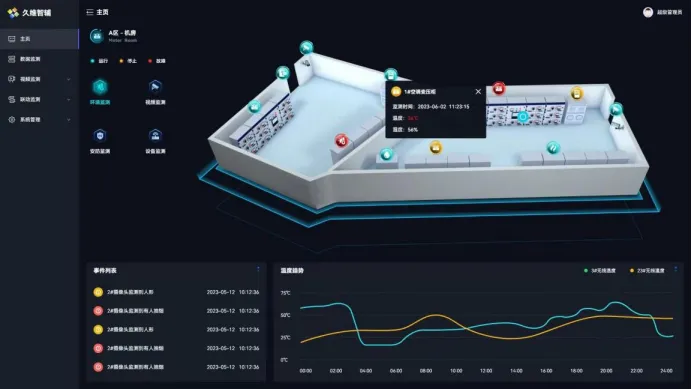
Table of Contents
- Intelligent Auxiliary Control System Overview
- Benefits & Use Cases of Intelligent Auxiliary Control System in Intelligent Control System Solution
- Cost, Maintenance & User Experience
- Sustainability & Market Trends in Information transmission, software and information technology services
- Conclusion on Intelligent Auxiliary Control System from Hebei Yanchun Qianjian Technology Co., Ltd.
Intelligent Auxiliary Control System Overview
An Intelligent Auxiliary Control System augments core automation by orchestrating sensing, decision-making, and actuation across equipment, lines, and facilities. Positioned between field devices and higher-level orchestration (MES/ERP), it delivers edge analytics, coordinated interlocks, predictive alarms, and autonomous optimization. In Information transmission, software and information technology services—particularly within Software and Information Technology Services and Intelligent Control System Solution—this layer is mission-critical for reliability, safety, and continuous improvement.
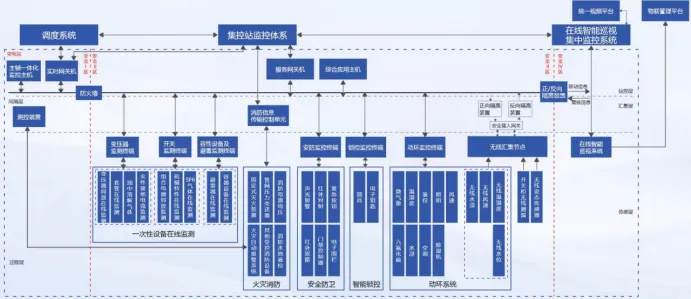
Technically, the system typically integrates PLC/IPC controllers, industrial gateways, and AI-enabled edge modules. Communication is vendor-agnostic via protocols such as OPC UA, Modbus/TCP, PROFINET, and MQTT, ensuring interoperability with SCADA, historians, and cloud platforms. Features often include redundant architectures, hot-swappable I/O, IEC 61131-3 compliant logic, RESTful APIs, and secure remote maintenance. A representative deployment might synchronize conveyor speeds with robotic pickers, using vibration and vision data to predict jams and dynamically adjust parameters—minimizing downtime while safeguarding throughput.
Hebei Yanchun Qianjian Technology Co., Ltd. designs and manufactures robust, field-proven platforms that align with demanding industrial requirements. Their Intelligent Auxiliary Control System emphasizes durability, open integration, and lifecycle support—key attributes for B2B decision makers seeking scalable performance and reduced operational risk. Explore product details at the official page to align capabilities with your process roadmap.
Benefits & Use Cases of Intelligent Auxiliary Control System in Intelligent Control System Solution
Across discrete and process industries, an Intelligent Auxiliary Control System complements primary control to enhance quality, uptime, and energy performance. In manufacturing, it balances multi-line production, orchestrates AGVs/AMRs, and adapts setpoints to real-time demand. In utilities, it optimizes pump schedules, detects anomalies in vibration or temperature patterns, and manages load shedding. In logistics, it synchronizes conveyors, diverters, and barcode scanners to maintain OTIF targets. These applications rely on accurate sensing, fast inference, and safe actuation to close the loop autonomously.
- Edge AI and rule-based coordination for predictive maintenance and quality inspection.
- Protocol-rich integration (OPC UA/MQTT) enabling easy connection to SCADA/MES/cloud.
- Redundant, cyber-hardened architecture aligned with IEC 62443 principles.
- Modular expansion and open APIs for rapid customization and faster commissioning.
Hebei Yanchun Qianjian Technology Co., Ltd. brings domain expertise across Intelligent Control System Solution projects—from specification and FAT/SAT to on-site tuning. Their engineering teams prioritize deterministic performance and observability, providing dashboards, digital twin hooks, and version-controlled logic libraries so operations and IT teams can collaborate effectively and improve throughput with confidence.
Cost, Maintenance & User Experience
Total cost of ownership for an Intelligent Auxiliary Control System hinges on more than acquisition. Key drivers include integration effort, downtime avoidance, spare parts commonality, and cybersecurity resilience. Hebei Yanchun Qianjian Technology Co., Ltd. emphasizes standardized modules and vendor-neutral connectivity to reduce engineering hours, while ruggedized components and environmental ratings lower failure rates in harsh conditions. Over the lifecycle, predictive maintenance and automated changeover can translate into meaningful OEE improvement and shorter payback windows.
From a maintenance perspective, remote diagnostics, firmware OTA, and built-in asset health dashboards streamline corrective actions. Operators benefit from intuitive HMIs with role-based access, while IT teams gain observability through logs, metrics, and alerts integrated into SIEM/CMMS. Feedback from Software and Information Technology Services clients highlights the value of clear documentation, API consistency, and stable SDKs—critical for rapid iteration and safe updates. The result is a user experience that balances control-room predictability with modern DevOps agility.
Sustainability & Market Trends in Information transmission, software and information technology services
Sustainability expectations and regulatory momentum are reshaping automation strategies. Enterprises increasingly require energy transparency, scope 2/3 reporting, and low-carbon operations. An Intelligent Auxiliary Control System helps by monitoring energy intensity per unit, enabling demand response, and automating power-aware setpoints—without compromising production. Alignment with frameworks such as ISO 50001 and industry guidance on data governance ensures traceable, auditable performance gains.
Market trends point to convergence of OT/IT, secure remote operations, and AI at the edge. Hebei Yanchun Qianjian Technology Co., Ltd. invests in secure-by-design architectures, lifecycle patching, and interoperability so customers can scale confidently. Eco-conscious design practices—component longevity, efficient power supplies, and recyclable packaging—support corporate sustainability goals. As Industry 4.0 matures, these capabilities position B2B decision makers to unlock continuous efficiency improvements while meeting compliance and ESG commitments.
Conclusion on Intelligent Auxiliary Control System from Hebei Yanchun Qianjian Technology Co., Ltd.
In the context of Information transmission, software and information technology services—especially within Software and Information Technology Services and Intelligent Control System Solution—an Intelligent Auxiliary Control System is the strategic layer that amplifies reliability, adaptability, and insight. Hebei Yanchun Qianjian Technology Co., Ltd. delivers industrial-grade engineering, open integration, and lifecycle support that help enterprises scale securely and sustainably. Ready to modernize control coordination and performance?
- Contact us: email: yanchunjituan@163.com
- Visit our website: https://www.yanchungongxiang.com
- Explore the product: Intelligent Auxiliary Control System