
Intelligent Auxiliary Control System for Efficiency & Safety
Intelligent Auxiliary Control System is a key solution in the Information transmission, software and information technology services industry, specifically within Software and Information Technology Services and Intelligent Control System Solution. This article explores how Hebei Yanchun Qianjian Technology Co., Ltd. supports professionals with durable, high-performance products, and explains why this product is an ideal choice for businesses in these sectors.
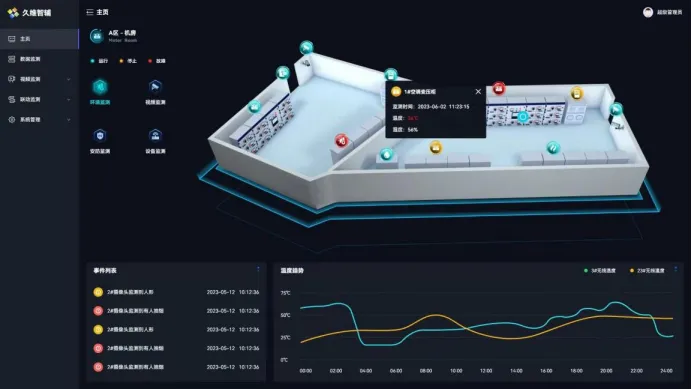
Table of Contents
- Intelligent Auxiliary Control System Overview
- Benefits & Use Cases of Intelligent Auxiliary Control System in Intelligent Control System Solution
- Cost, Maintenance & User Experience
- Sustainability & Market Trends in Information transmission, software and information technology services
- Conclusion on Intelligent Auxiliary Control System from Hebei Yanchun Qianjian Technology Co., Ltd.
Intelligent Auxiliary Control System Overview
In modern plants, utilities, logistics hubs, and smart buildings, core control loops are only part of the story. The Intelligent Auxiliary Control System (IACS) provides the orchestration layer around primary automation—coordinating subsystems such as power, safety interlocks, environmental controls, quality checks, and asset health to keep operations stable, efficient, and compliant. Positioned within the Information transmission, software and information technology services domain—specifically Software and Information Technology Services and Intelligent Control System Solution—an IACS bridges OT with IT, turning disparate signals into actionable, real-time decisions.
- Typical architecture includes edge controllers with deterministic I/O, protocol gateways (OPC UA, Modbus/TCP, MQTT), AI-enabled analytics for anomaly detection, and APIs for MES/ERP/CMMS integration. Redundant networking, time synchronization, and cybersecurity-by-design ensure continuity and protection.
- Key technical capabilities often include event-driven rules engines, digital-twin models for what-if simulations, and low-code configuration for rapid commissioning. Systems are engineered for harsh environments with industrial-grade EMC tolerance and wide operating temperature ranges.
- Hebei Yanchun Qianjian Technology Co., Ltd. delivers robust implementations backed by rigorous quality management and lifecycle support—spanning design, deployment, and optimization—making it a reliable manufacturer and partner for mission-critical operations.
Benefits & Use Cases of Intelligent Auxiliary Control System in Intelligent Control System Solution
B2B decision makers evaluating auxiliary control require measurable improvements: fewer stoppages, faster changeovers, lower energy intensity, and assured compliance. An Intelligent Auxiliary Control System brings these outcomes by automating support processes around core production or service delivery. For example, in discrete manufacturing it synchronizes tool condition monitoring with machine availability; in utilities it coordinates pump drives with reservoir levels and energy tariffs; in buildings it aligns HVAC, lighting, and access control to occupancy and safety policies.
- Applications include predictive alarms for secondary equipment, energy peak shaving, automatic standby-to-active switchover, quality sampling, warehouse shuttle orchestration, and environmental compliance logging.
- Competitive advantages: vendor-agnostic connectivity, edge AI for real-time insights, unified data modeling for enterprise systems, and low-code workflows that shorten commissioning and change management while reducing engineering risk.
- Hebei Yanchun Qianjian Technology Co., Ltd. applies domain expertise across sectors, offering reference architectures, proven integration patterns, and field-tested templates to accelerate time-to-value for Intelligent Control System Solution projects.
Cost, Maintenance & User Experience
Total cost of ownership for an Intelligent Auxiliary Control System is driven by integration effort, downtime avoidance, and lifecycle service. By standardizing interfaces and using prebuilt logic blocks, engineering hours are reduced and retrofits become less disruptive. Remote diagnostics, over-the-air updates, and modular spares lower maintenance overhead. The result is a clearer ROI profile, where gains stem from higher availability, optimized energy use, and reduced manual intervention—often realized within typical CAPEX cycles in industrial environments.
- Customers in Software and Information Technology Services settings report smoother commissioning, intuitive HMIs for operators, and better cross-team visibility via dashboards that expose asset health, alarms, and compliance status in a single pane of glass.
- Hebei Yanchun Qianjian Technology Co., Ltd. supports multiple commercial models—project-based, managed services, or hybrid—along with training and SLAs. This aligns cost with outcomes and ensures the user experience remains consistent from pilot to scale-out.
Sustainability & Market Trends in Information transmission, software and information technology services
The market is converging around three imperatives: secure connectivity, energy stewardship, and data-driven resilience. Regulations and frameworks—such as IEC 62443 for industrial cybersecurity, ISO 50001 for energy management, and RoHS/REACH for material compliance—are influencing procurement and architecture choices. Intelligent Auxiliary Control System deployments now routinely include encrypted transport, role-based access, audit trails, and energy KPIs to support ESG reporting and continuous improvement programs.
- Trends shaping the space: edge analytics, OPC UA over TSN, private 5G for deterministic wireless, and cloud-native observability for multi-site fleets. These enable faster decisions and coordinated control beyond a single facility.
- Hebei Yanchun Qianjian Technology Co., Ltd. advances sustainability by designing energy-efficient hardware profiles, enabling remote services that cut travel emissions, and offering lifecycle programs for responsible upgrades and recycling—positioning clients for regulatory readiness and long-term competitive advantage.
Conclusion on Intelligent Auxiliary Control System from Hebei Yanchun Qianjian Technology Co., Ltd.
In Intelligent Control System Solution projects across the Information transmission, software and information technology services industry, an Intelligent Auxiliary Control System delivers operational stability, energy optimization, and faster, safer decision-making at the edge. Hebei Yanchun Qianjian Technology Co., Ltd. combines engineering rigor with scalable integration to ensure rapid deployment and dependable lifecycle value for B2B operations.
- Strengthen auxiliary automation, unify data, and future-proof your assets with a partner committed to reliability and innovation.
- Contact us: email: yanchunjituan@163.com
- Visit our website: https://www.yanchungongxiang.com