
Best Propane Powered Generator for House Backup and Home Security
Choosing the Best Propane Powered Generator for House Backup
Ensuring your home remains functional during a power outage is not just about convenience; it is about safety and peace of mind. A propane powered generator for house use offers a reliable alternative to traditional gasoline models. Propane is cleaner, stores longer without degrading, and can often be piped directly from a large home tank. In this comprehensive guide, we will explore the technical advantages, selection criteria, and installation tips to help you secure a stable energy source for your family, ensuring that critical appliances like refrigerators and medical equipment never stop running.
Why Choose a Propane Powered Generator for House Security?
One of the primary reasons homeowners pivot toward propane is fuel stability. Unlike gasoline, which can gum up a carburetor if left for a few months, propane remains stable indefinitely. This makes it the ideal choice for emergency standby systems. Additionally, propane produces fewer emissions and is generally safer to store in large quantities on your property. By integrating a propane powered generator for house, you eliminate the frantic search for fuel at gas stations during a regional blackout, as your energy source is already on-site and ready to deploy.
Key Advantage: Propane is an "infinite" fuel source when connected to a residential tank, providing weeks of power without the need for manual refueling, unlike portable gas units.
Comparing Propane vs. Gasoline Generators
When deciding on the right system, it's essential to look at the trade-offs. While gasoline generators are often cheaper upfront, the long-term maintenance and fuel handling costs are higher. A propane powered generator for house typically offers a cleaner burn, which reduces engine wear and extends the overall lifespan of the machine. The following table breaks down the critical differences to help you make an informed decision.
Sizing Your Propane Powered Generator for House Loads
Calculating your power needs is the most critical step. You must distinguish between starting watts (the surge of power needed to start a motor) and running watts (the power needed to keep it going). For most homes, a propane powered generator for house needs to be sized based on the essential circuits you intend to back up. For example, a refrigerator might need 1,200 running watts but 3,000 starting watts. Overestimating leads to wasted fuel, while underestimating can cause the generator to trip or fail under load.
Installation and Safety Protocols for Propane Systems
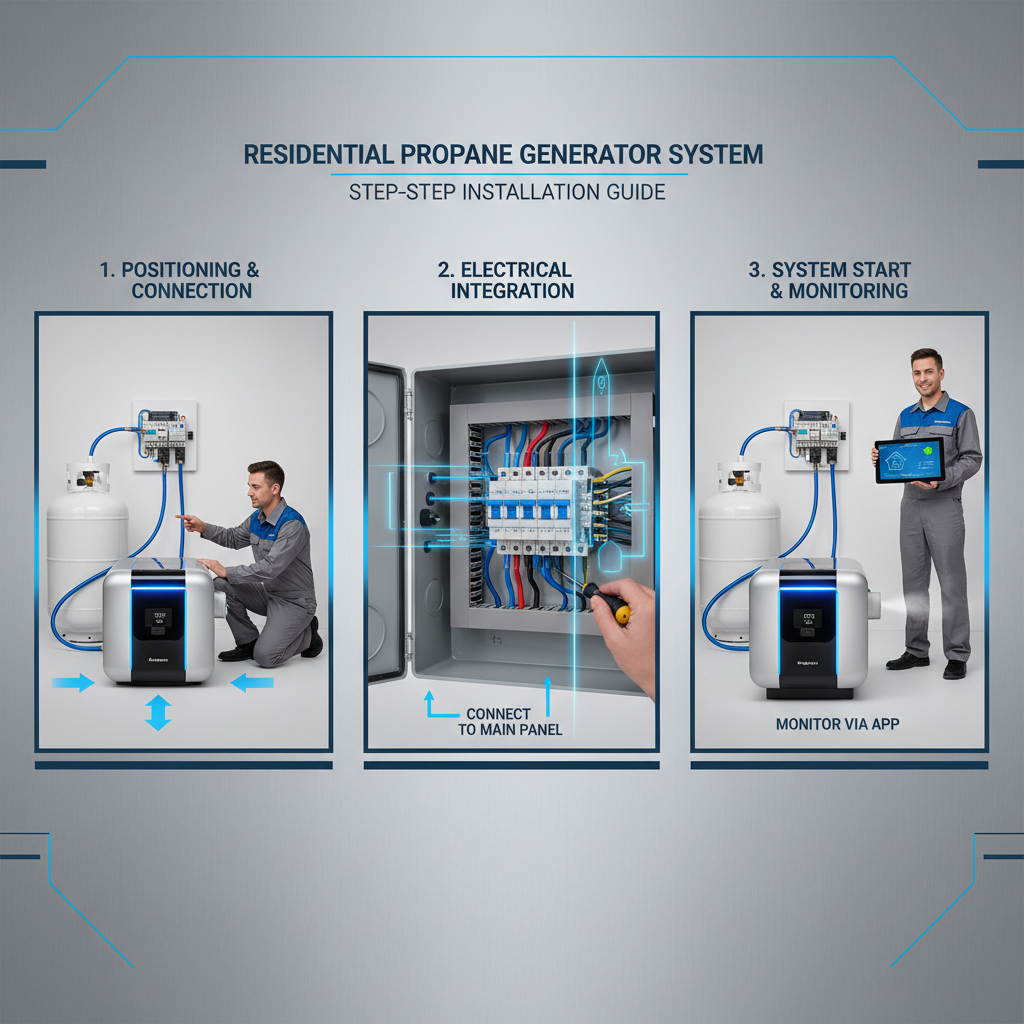
Installation is where professionalism is non-negotiable. A propane powered generator for house must be installed outdoors, away from windows and air intakes, to prevent carbon monoxide poisoning. We highly recommend using an Automatic Transfer Switch (ATS). The ATS detects a power failure and automatically switches your home's electrical load from the utility grid to the generator, providing a seamless transition that protects your electronics from power spikes.
Technical Specifications of High-Efficiency Propane Units
When reviewing product catalogs, you will encounter various specifications. Key metrics include the engine displacement, the alternating current (AC) frequency, and the fuel consumption rate per hour. Modern high-efficiency units often feature voltage regulators to ensure a "clean" sine wave, which is essential for sensitive electronics like laptops and smart TVs. Below is a typical specification sheet for a residential-grade propane backup system.
Maintaining Your Backup Power System for Longevity
To ensure your system works when you need it most, a strict maintenance schedule is required. This includes monthly exercise cycles where the generator runs for a short period to lubricate the engine and check the battery. Changing the oil and replacing the air filter annually is standard practice. Because a propane powered generator for house uses a cleaner fuel, you will find that carbon buildup is significantly lower than in gas engines, though oil changes remain vital for mechanical health.
Conclusion: Securing Your Home with Propane Power
Investing in a propane powered generator for house is a strategic move for any homeowner living in areas prone to weather-related outages. By choosing propane, you opt for a cleaner, more stable, and more convenient fuel source that eliminates the stress of emergency refueling. When paired with correct sizing and professional installation, these systems provide an invisible shield of security, ensuring your home remains a sanctuary regardless of the state of the external power grid.
Frequently Asked Questions (FAQs)
Is a propane generator more expensive than a gas one?
The initial purchase price of a propane generator is often slightly higher than a basic gasoline portable unit, primarily due to the fuel conversion kits and the cost of installing a propane tank. However, when you consider the long-term value—such as the lack of fuel degradation, lower engine maintenance, and the convenience of a permanent fuel supply—propane is often more cost-effective over the lifespan of the machine. Additionally, it adds more tangible value to your property's resale appeal.
Can I use a portable propane tank for my house generator?
Yes, many residential propane generators are "dual-fuel" or designed to accept both large stationary tanks and portable LPG cylinders. Using portable tanks is a great option for those who don't want to install a full-sized tank on their lawn. However, for true "whole-house" backup, a stationary tank is recommended because it provides the volume necessary to run heavy loads (like AC units) for several days without the need to manually swap out small tanks every few hours.
How loud are propane powered generators for house use?
Noise levels vary by model, but most standby propane generators are housed in sound-attenuating enclosures that significantly reduce the decibel level compared to open-frame portable units. While they are not silent, they typically produce a hum similar to a large air conditioning condenser. To further reduce noise, homeowners can install the unit at a strategic distance from bedroom windows or add a sound-absorbing fence, provided that ventilation requirements are strictly maintained for safety.
Do I need a permit to install a propane generator?
In most jurisdictions, yes. Because the installation involves both electrical work (connecting to your main panel) and fuel piping (connecting to a propane tank), local building codes typically require electrical and plumbing permits. This ensures that the installation is safe and meets fire codes. We strongly advise hiring a licensed electrician and a certified propane technician to handle the setup. You can find more guidance on system compatibility on the Yanchungongxiang website.